
The Chair That Wasn’t Mine

For years, I had the same chair at work. It wasn’t anything special—just a regular office chair, but it was my chair. It had molded to me over time, adjusting to the way I sat, the way I leaned, the way I thought. It was always there, predictable and comfortable, an unspoken companion in my daily routine.

But one morning, I walked into work and something felt off. I sat down and immediately noticed the difference. The cushion was firmer. The armrests were slightly higher. The chair I had known for years was gone—replaced by something that was not mine.

Annoyance bubbled up instantly. Who moved my chair? Why would someone switch it? I’ve used that chair forever! My mind raced, grasping for justifications for why this was unfair. As I sat there, adjusting, fidgeting, and silently resisting, I could feel something deeper stirring—attachment.

It was just a chair. A chair. But my mind had made it mine. My familiarity with it had turned into possession, and that possession had become comfort. And now, because something had shifted outside of my control, I was experiencing discomfort, frustration, and even a little resentment.

That’s when it hit me.

How often do we do this in life? How often do we latch onto things, mistaking familiarity for necessity? We cling to routines, relationships, identities, and objects, believing they define us. And when they change—or worse, disappear—we feel lost, disturbed, and sometimes even angry.

The truth is, the chair was never really mine. It had simply been where I placed myself day after day. Just like so many things in life, it was temporary. The only thing making this moment uncomfortable was my resistance to what is.

I took a deep breath and let go.

Let go of the expectation.
Let go of the attachment.
Let go of the illusion of control.

And just like that, the frustration dissolved. The chair didn’t need to change—I did.

From that moment forward, I saw everything a little differently. Every time I felt resistance rise in me, I asked, What am I holding onto? What am I afraid to release?

Because true freedom is not in holding on—it’s in knowing we were never meant to hold onto anything at all.

Gratitude: Questions To Reflect On

  1. What was one moment today that you felt grateful for, and why?
  2. Name a person who helped you this week. What did they do and how did it make you feel?
  3. What is something small that you often overlook, but truly appreciate when you think about it?
  4. When was the last time you felt thankful for something unexpected? Describe what happened.
  5. What is one way you can show gratitude towards someone this week?
  6. Think about a difficult situation. Can you find something in it that you are grateful for?
  7. What is an ability or skill you have that you are thankful for? How did it help you recently?
  8. Reflect on your surroundings. What is something in your environment you are grateful for today?
  9. Who is someone that you haven’t thanked recently but deserves your gratitude? Why?
  10. What is something you’re looking forward to, and why are you grateful for it?

These questions can prompt players to reflect on various aspects of gratitude in their lives, from interpersonal relationships to self-awareness and appreciation of the mundane.

Developing The Witness To The ‘I’ness Of You

Tools and Practices for Developing a Witness to Oneself

1. Mindfulness Meditation

  • Practice being fully present and aware of your activities and surroundings without overreacting. Start with a few minutes of focusing on your breath or bodily sensations and gradually increase your meditation time.

2. Journaling

  • Write down your thoughts and feelings regularly to observe your internal state without judgment. This helps in noticing patterns or triggers in your behavior.

3. Mindful Observation Exercises

  • Choose a routine activity and practice focusing completely on the task. For example, pay attention to the sensations of washing dishes, like the texture and temperature of the water, and the sounds around you.

4. Retreats and Silent Meditation

  • Participate in retreats or engage in silent meditation periods to deepen your capacity to observe your mental and emotional processes in an environment that minimizes external distractions.

5. Yoga and Breathwork

  • Engage in yoga and controlled breathing exercises to calm the mind and facilitate the observation of your thoughts without attachment, harmonizing the body and mind.

6. Daily Reflection

  • Spend a few minutes at the end of each day reflecting on your experiences and behaviors to develop a habit of observing your life’s narrative from a distance and recognizing patterns.

7. Reading and Listening to Spiritual Teachings

  • Regularly engage with the wisdom of spiritual teachers through books, lectures, or podcasts to gain insights and reinforce the importance of developing a witnessing consciousness.

8. Mindful Listening and Speaking

  • Practice listening to others without preparing your response while they speak, which cultivates presence and awareness of habitual mental responses. Also, practice mindful speaking by pausing before speaking, reflecting on the intention behind your words, and noticing your emotions.

Implementing these practices can help you develop the ability to witness yourself, leading to a more conscious and centered way of living.

Love Languages – A Tool For Transformation

The concept of the 5 Love Languages (words of affirmation, acts of service, receiving gifts, quality time, and physical touch) is meant to help people understand how they give and receive love. However, it can also unintentionally reinforce a framework where people focus on compensating for a lack rather than expanding into love’s fullness.

If we view love as something we must receive in a specific way to feel whole, we risk reducing ourselves to a set of unmet needs. But if we approach love languages as a means to express love more fully—rather than just filling perceived voids—then they can become a tool for deeper connection rather than a limitation.

True love is expansive, beyond categories. It is not something we need to get but something we are. If we focus too much on how we receive love rather than how we embody love, we may unintentionally operate from a place of deficiency rather than abundance. What do you think?

Once unconscious beliefs about love and worthiness are identified, the next step is not just removing dependencies but transforming them into wholeness. Here’s a process that can help:

1. Awareness Without Judgment

Recognizing a dependency (such as needing affirmation or physical affection to feel loved) is powerful. Instead of rejecting it, observe it like a compassionate witness. Ask yourself:

  • Where did this come from?
  • What does this belief protect me from?
  • How has it shaped my relationships?

2. Releasing the Illusion of Lack

Many dependencies are rooted in the belief that love must come from outside. The truth is, love is within you, always present. A simple practice is to pause whenever you feel the craving for external validation and ask:

  • If I already had this love within me, how would I feel right now?
  • How can I give this to myself?

This shifts the energy from seeking to being.

3. Reparenting Yourself

If your love dependency stems from unmet childhood needs, you can “reparent” yourself by offering what was missing.

  • If you lacked encouragement, speak affirmations to yourself.
  • If you lacked presence, practice deep self-connection through meditation.
  • If you lacked physical affection, engage in self-care that nurtures your body (massage, movement, mindful touch).

The key is to become your own source of love, meeting yourself where others didn’t.

4. Expanding Love Beyond the Self

When love is no longer a dependency but a state of being, you naturally extend it outward. Instead of seeking, you overflow. Acts of kindness, deep presence, and giving without expectation become effortless.

This shift transforms relationships:

  • You love freely, without attachment.
  • You receive love without fear of losing it.
  • You recognize that love is not transactional—it simply is.

5. Living as Love Itself

At the highest level, love is not something to be “received” but recognized as who you are. When you dissolve the illusion of separation, the longing disappears—not because you don’t experience love from others, but because you realize you were never without it.

Does this resonate with you? Where do you feel the greatest attachment in receiving love?

Mirrors of the Soul

In the glass of the world we find,
Echoes of our own state of mind.
The good we see in others’ deeds,
Reflects the bounty of our seeds.

A harsh word cast in stony throws,
Reveals where a shadowed heart goes.
But kindness, like a river, flows
From the source where true goodness grows.

In the eyes of another’s plight,
What we see in that dimmed light,
Is the lens of our own insight,
Coloring the dark and bright.

If love is what we choose to share,
We find love waiting everywhere.
Yet if our thoughts breed only fear,
It’s fear that whispers back so clear.

So let us tend with care our plot,
Planting grace, forgetting not—
The world’s a mirror, subtly wrought,
Reflecting all our inner thought.

Through this artful gaze, we may,
Craft a brighter, kinder day,
For the view from our soul’s window,
Colors the world with the hues we know.

Embracing the Nian: A New Year’s Resolution to Confront Our Fears

Hello, wonderful souls!

As we step into another new year, full of promise and potential, let’s talk about a timeless tale from Chinese folklore—the legend of the Nian. This mythical beast, feared for its annual appearances, would emerge at the turn of the year to terrorize villages until they learned to chase it away with loud noises and bright lights.

But what if, instead of scaring away our own personal ‘Nians’ with metaphorical firecrackers, we chose to meet them face to face? What if we transformed our New Year’s resolution to not just ward off the beasts of fear and doubt, but to understand and conquer them?

Identify Your Nian

Our first step is to recognize our own beasts. What fears lurk in the shadows of your life? Is it the fear of failure, the anxiety of the unknown, or perhaps the dread of not being good enough? Naming your Nian diminishes its power—what you can identify, you can confront.

Understand Your Nian

Understanding your Nian is like demystifying a shadow. Dive deep into the why and how of your fears. Why do they hold power over you? How do they affect your daily life? This understanding is your light, turning the monstrous unknown into something tangible and manageable.

Confront Your Nian

Confrontation might sound daunting, but it’s about facing your fears with the support and tools you need to feel empowered. This could be through meditation, seeking counsel, or simply practicing bravery in small, everyday acts. Each act of bravery is a victory, a firecracker of your own, celebrating your courage.

Transform Your Nian

Finally, we transform our relationship with our fears from avoidance to empowerment. Each encounter with your Nian is an opportunity to grow stronger, more resilient. Like villagers who turned the night of terror into a festival of lights and sounds, you can transform your fear into a celebration of courage.

This year, let’s not just chase our fears away. Let’s meet them, understand them, and claim the immense power they hold over us as our own. Together, let’s turn every fear into a stepping stone towards the light of self-discovery and true empowerment.

Happy New Year to all, and to all a fearless year ahead!

Happy Lunar New Years – 2025

As the Lunar New Year arrives, it greets us with open arms, bringing promises of peace, prosperity, and love. May this auspicious beginning fill your hearts with joy and your lives with the richness of shared moments. Let us embrace the new year with hope and enthusiasm, celebrating the wonderful opportunities it unfolds for us all.

Wishing you a harmonious and joyful New Year!

With Warmth and Light, Stillness Awaits

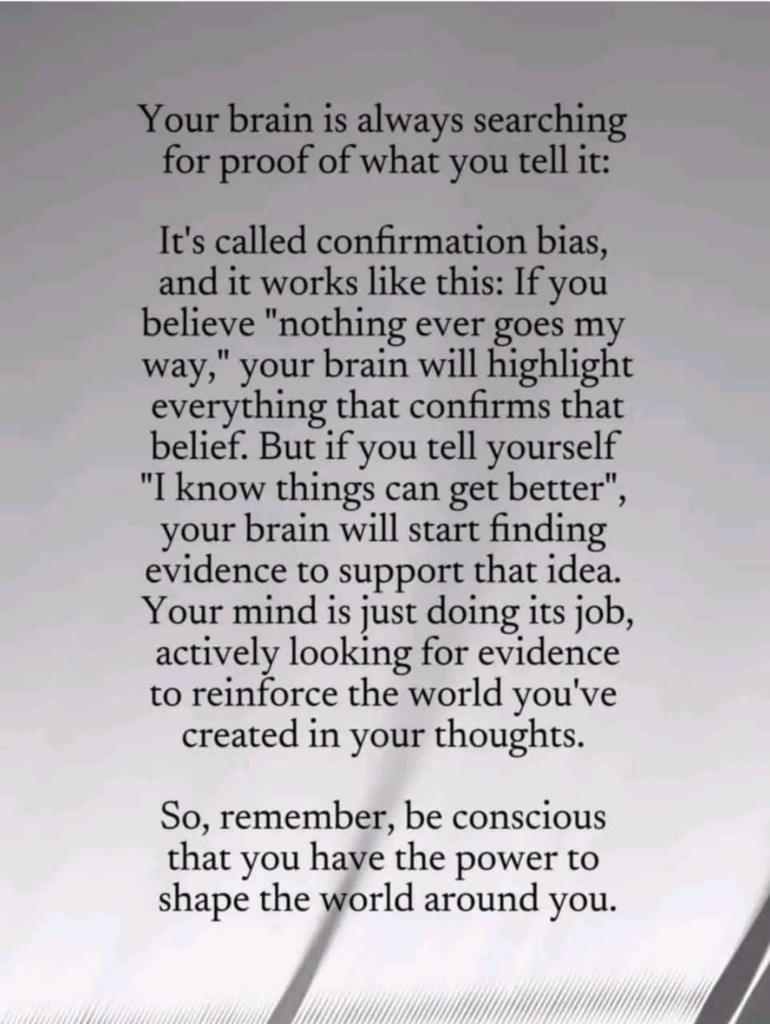
Asking Better Questions: Expanding Knowledge vs. Confirming Bias

When we ask questions to expand our knowledge and wisdom, we open ourselves to new perspectives and insights, fostering understanding and connection. Conversely, asking questions from a biased standpoint often aims to confirm our existing beliefs, closing off potential avenues for learning and growth.

Differences in Questioning:

  1. Open-ended vs. Leading Questions:
    • Expansive: “What are your thoughts on this topic?” This type of question invites diverse opinions and fosters a deeper understanding.
    • Biased: “Don’t you think this is wrong?” Such questions presume a correct answer, pushing the conversation towards a preconceived notion.
  2. Inquiry vs. Assertion:
    • Expansive: “Can you explain more about your experience?” This encourages sharing and exploration of different life experiences.
    • Biased: “Isn’t it just a matter of common sense?” This implies there’s only one logical way to view the situation, minimizing other perspectives.

Strategies for Better Understanding:

  1. Cultivate Curiosity: Genuine curiosity about others’ views can bridge gaps in understanding. Approach conversations with the intent to learn rather than to persuade.
  2. Practice Active Listening: Focus on truly hearing and understanding what the other person is saying without immediately planning your response or rebuttal.
  3. Embrace Humility: Recognize that your perspective is just one of many. Understanding that you might not always have the complete picture encourages a more open and inclusive dialogue.
  4. Seek Common Ground: Identifying shared values or experiences can lay the foundation for more nuanced discussions about areas of disagreement.

By shifting from seeking confirmation of our biases to fostering an authentic exchange of ideas, we can significantly enhance our collective wisdom and understanding.

Finding Magic Beyond Probability

In a world driven by chances and probabilities, we often forget the beauty of certainty found in the present moment. Spirituality teaches us that the true magic lies in stepping beyond the dice rolls of “what if” and embracing the reality of “what is.”

When we remove the probability factor, we are no longer trapped in the fear of failure or the hope for specific outcomes. Instead, we anchor ourselves in the flow of life, where infinite possibilities coexist, and the present becomes our sanctuary. This is where magic unfolds—not in predicting what might happen, but in fully living what is already happening. The universe, when trusted, ceases to be a gamble and becomes a divine dance.

The Story of the Butterfly

Once, there was a woman who loved her garden. Each spring, she would plant flowers and hope for butterflies to visit. One year, she planted a special mix of flowers said to “increase the probability” of attracting butterflies. She waited and watched, checking daily to see if her garden had become the haven she envisioned. Weeks passed, and her hope dwindled as no butterflies came. Frustrated, she gave up her expectations and simply started tending the garden for its own sake. She watered the plants, removed weeds, and admired the vibrant colors and fragrances of her blooms.

Then, one morning, as she sat quietly among her flowers, a kaleidoscope of butterflies appeared, dancing from bloom to bloom. She realized that the magic wasn’t in manipulating outcomes but in tending to the moment with love and trust. The butterflies had come, not because she forced them to, but because she created a space of beauty and presence.

The Archer’s Secret

In a small village, an archer was known for hitting the bullseye every single time. When asked how he achieved such precision, he smiled and said, “I do not aim to hit the center. I aim to be still.” His students were puzzled and questioned him further.

He explained, “Most archers are consumed with probabilities: calculating the wind, the tension of the bowstring, or the weight of the arrow. But all those calculations pull you into the future. When I let go of the need to control the outcome and focus on the stillness within, the arrow finds its way. The bullseye is not the target. Presence is.”

His wisdom spread throughout the village, and soon people from far and wide came to learn, not the art of archery, but the art of presence.

The Unexpected Path

A young man named Ravi dreamed of becoming a renowned musician. He spent years perfecting his craft, entering competitions, and networking, all with the hope of “increasing his odds” of being discovered. Despite his efforts, success eluded him, and frustration grew. One day, feeling defeated, Ravi took his guitar to a quiet park and began playing, not for fame or recognition, but for himself.

To his surprise, an older man approached him after listening to his music. The man turned out to be a retired music producer who had been searching for raw, unpolished talent to mentor. This chance encounter set Ravi on a path he could never have predicted.

Reflecting on this turn of events, Ravi realized the futility of chasing probabilities. True magic came when he released the pressure to force outcomes and simply embraced the joy of his music. The universe had conspired in ways he could not foresee.

The Lesson of the Present

Life, at its core, is not a series of probabilities to be calculated but a mystery to be lived. The moment we stop obsessing over what might happen and start embracing what is, we align with the divine rhythm of existence. In this rhythm, there is no uncertainty—only the unfolding of a higher plan, one that is beyond our comprehension but always in our favor.

Let go of the need to calculate your next move. Trust the magic of the present. When you remove the probability factor, you’ll discover that what seemed uncertain was always orchestrated for your highest good. The magic is not in predicting the future but in fully experiencing the gift of now.
Nature Does Not Discriminate: Why Should We?

Nature is one of the greatest teachers we have. It operates with a quiet wisdom that transcends the boundaries humans often create for themselves. When we observe the natural world closely, we notice that it functions in harmony, free from judgment, prejudice, or discrimination. The sun rises for everyone, the rain falls on all, and the wind doesn’t choose who to embrace. If nature, in its infinite wisdom, does not discriminate, why should we?

The Inclusivity of Nature

Imagine a tree standing tall in a park. It offers shade to everyone, regardless of who they are. It doesn’t ask if you’re rich or poor, young or old, black or white. It simply is. The ocean doesn’t turn away certain swimmers because of their beliefs or background. Rivers flow freely, nourishing every living being in their path without hesitation. This is the natural order—an unbiased, unconditional giving and coexistence.

Discrimination Is a Human Construct

Discrimination, at its core, is an artificial boundary created by human minds. Nature doesn’t create these divisions; we do. We label, separate, and categorize each other based on factors like race, gender, religion, and social class. But these are all human constructs—ideas we impose on ourselves and others. The natural world reminds us that these divisions are illusions.

What We Can Learn from Nature

Nature invites us to look beyond surface differences and see the interconnectedness of all life. The diversity of a forest, with its countless species of plants and animals, teaches us that strength lies in variety. Each element contributes to the ecosystem’s balance and thriving. Without the bee, there’s no pollination. Without the rain, there’s no life. Everything is interconnected, and every part has value.

When we discriminate, we disrupt this natural flow of unity. We rob ourselves of the richness that diversity brings. By embracing the lessons of nature, we can begin to honor the inherent worth of every individual, just as nature does.

The Spiritual Call to Equality

From a spiritual perspective, we are all sparks of the same divine light. Every soul, regardless of its external appearance or circumstances, carries the same sacred essence. Discrimination blinds us to this truth. It keeps us trapped in fear and separation, while nature calls us back to love and unity.

When we embrace the mindset that nature models for us, we open our hearts to compassion. We begin to see others not as “different” or “less than” but as equals on this shared journey of life. The truth is, the world needs all of us—just as it needs the rain, the sun, the rivers, and the trees. Together, we create the wholeness of existence.

A World Without Discrimination

Imagine a world where humans followed nature’s example—a world where kindness replaced judgment, and love outweighed fear. A world where we embraced each other’s differences as strengths, rather than obstacles. This isn’t just a utopian dream; it’s a possibility waiting to be realized. It begins with each of us making the conscious choice to let go of prejudice and embrace unity.

Let’s Return to Harmony

Nature’s message is clear: we are all part of one interconnected whole. When we discriminate, we go against the natural order of harmony and balance. Let us take a lesson from the trees, the rivers, the sky, and the earth. Let us rise above the man-made divisions that separate us and return to the unity that is our birthright.

As spiritual beings on this human journey, let’s honor the wisdom of nature and strive to live in harmony with one another. After all, if nature does not discriminate, why should we? Let’s choose love, equality, and unity—today and every day.